Justice League Strategy
High above the Earth — so high that if you looked out the window you would see the whole planet curving beneath you, blue and green and white with clouds — there is a space station called the Watchtower. It orbits quietly, silently, watching everything below.
And inside the Watchtower, the world's greatest heroes sit around a round table.
Superman is there in his red and blue, his cape folded neatly behind him. Wonder Woman sits straight and still, her golden lasso coiled at her hip. The Flash taps his foot under the table at about four hundred miles per hour — he can't quite help it. Green Lantern leans forward, his ring glowing softly. Aquaman has his golden trident resting against his chair.
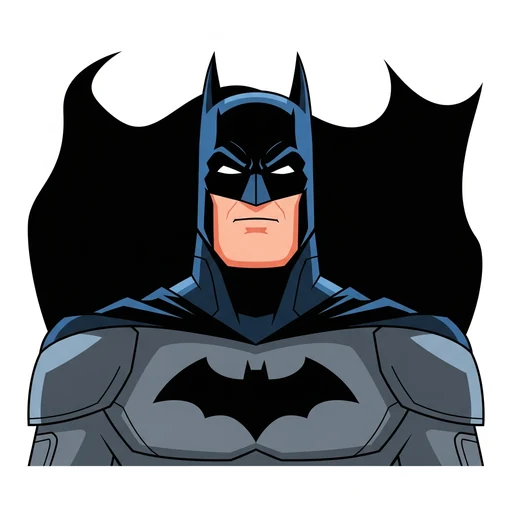
And at the far end of the table, in a chair that is somehow darker than all the others, sits Batman.
He doesn't have any superpowers. Not one. And every single hero in that room knows it. And every single hero in that room respects him more than almost anyone else, because of what he does have.
His mind.
The trouble had started in the Pacific, three days earlier. A villain called the Overload had planted electromagnetic disruptors in five different cities at once — Metropolis, Central City, Gotham, Coast City, and Amnesty Bay. At midnight, all five would fire simultaneously, and every power grid, every communication system, every screen and light and device on Earth would go dark. All at once.
Five cities. Midnight. Every hero knew the clock was ticking.
Superman started to speak. "We could split up — I'll take Metropolis —"
"No," Batman said.
The table went quiet.
Batman stood and spread his hands over the holographic map projected above the center of the table — a pale blue image of the five cities, each one marked with a glowing dot. "If we split up, Overload wins. He's counting on that. He knows which city each of us is most connected to. He wants us predictable."
Wonder Woman tilted her head. "Then what do you suggest?"
Batman's fingers moved across the map. "The disruptors use a shared frequency. They have to fire in sequence — a half-second delay between each one. Which means if we can disable the first one in time, the sequence breaks. All five go dark. His plan fails."
The Flash sat up. "Which city is first?"
"Central City." Batman's eyes moved to the Flash. "But the device is buried forty feet underground, inside the old aqueduct system. It's too tight a space for most of you."
He looked at the Flash for exactly one second.
The Flash grinned. "I can run down there in a blink, phase right through the walls, and —"
"Take this." Batman slid a small device across the table — a silver cylinder no bigger than a pen. "It emits a counter-frequency pulse. Hold it within one foot of the disruptor for exactly three seconds."
The Flash caught it without looking. "Three seconds? I could do three seconds in my sleep."
"The rest of you," Batman continued, "cover the other four cities. Not to destroy the devices — just to buy Flash the time he needs. Draw Overload's attention outward." He looked around the table. "Questions?"
Superman looked at him steadily. Then he said, "None. Let's go."
The Justice League moved.
At 11:58 PM, four heroes appeared simultaneously in four cities, making enough noise and commotion to keep Overload's eyes very, very busy. BOOM — Wonder Woman in Gotham, deflecting a squad of drones with her bracelets, KRANG KRANG KRANG. ZAP — Green Lantern in Metropolis, his emerald constructs smashing machines apart. SPLASH — Aquaman in Amnesty Bay, steering a tidal surge to knock out a generator.
At 11:59 PM and 47 seconds, the Flash arrived at the aqueduct under Central City. He phased through forty feet of earth and concrete in a heartbeat. There — the disruptor, a crackling, humming cube wedged between two ancient stone pipes.
He held the silver cylinder to it. One. Two. Three.
The disruptor went dark with a quiet, defeated hiss. The sequence died.
At midnight, nothing happened. The lights of five cities stayed on. Every screen still glowed. The world never even knew.
The Flash appeared back in the Watchtower fourteen seconds later, tossing the silver cylinder to Batman.
"Three seconds," he said happily. "Told you."
Batman caught it without looking. Tucked it away in his utility belt. Said nothing.
But as the heroes filtered out of the Watchtower, talking and laughing in relief, Superman fell back and walked quietly alongside Batman.
"You know," Superman said, "you plan better than anyone I've ever met."
Batman looked at him. "I have to," he said simply. "I don't have your speed or your strength. I have to be three steps ahead, or I have nothing."
Superman nodded slowly. "Maybe that's why the League works. Because you're always three steps ahead, so the rest of us don't have to be."
Batman said nothing. But as the door of the Watchtower slid open and the stars stretched out beyond the glass in every direction, he allowed himself one small, quiet nod.
Everyone has something to offer. Even — especially — the one without superpowers.