Batroc
Picture the inside of a turboprop plane — the kind of smaller aircraft that buzzes low and loud over desert landscapes, not terribly glamorous, very definitely functional. Now picture that plane flying at twenty thousand feet over the border between Libya and Tunisia. The stars are out. The desert is a dark rumple far below. And in the back of that plane, something has gone very wrong.
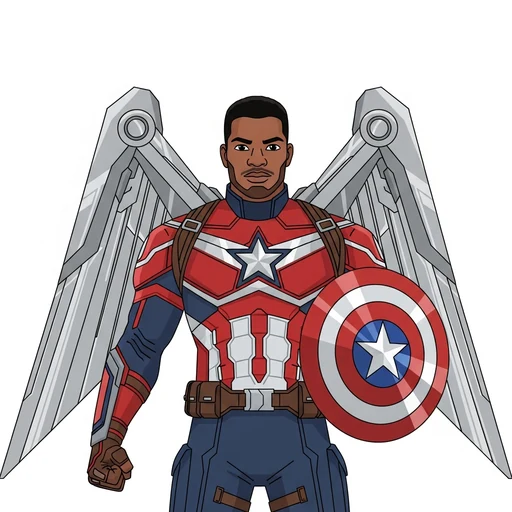
There is a hostage. A Tunisian intelligence officer, taken against his will, and very much in need of rescue. There is Sam Wilson, standing at the edge of the open cargo door with Wakandan-tech wings folded against his back, wind screaming past him at this altitude, looking down at the dark desert below and thinking: let's go.
WHOOOOSH.
He dropped out of the plane and the wings unfolded — slimmer than his old EXO-7 design, built by the engineers of Wakanda from lighter and stronger materials, more agile than anything Sam had flown before. He had been used to the EXO-7 for years: solid, reliable, familiar, like a good pair of boots. These new wings were something different. They moved like thought. They responded before he'd fully decided what he wanted to do.
And tonight he needed every bit of that speed, because waiting on that plane was a man named Georges Batroc.
Batroc was a French mercenary with a reputation. He had once fought Captain America himself — hand to hand, blow for blow, aboard a S.H.I.E.L.D. cargo ship — and given Steve Rogers a real contest before losing. That was the kind of fighter Batroc was: a practitioner of savate, the French fighting style that turns every kick into a precisely aimed weapon, fast and unpredictable and very, very pleased with itself. He had been hired to move the hostage across the border, and he was not planning to be interrupted.
Sam banked between the plane's engines, angling through the noise and heat, then dove alongside the fuselage. The Redwing drone deployed with a snap — a small, fast, brilliant piece of equipment that peeled away from Sam's back and shot ahead to deal with the parachuting shooters dropping out of the aircraft's forward door. ZAP. ZAP. One by one, Redwing neutralized each shooter before they could be a problem.
Sam swung through the open rear bay of the plane, tucked his wings, and found the hostage. Quick assessment. Quick work. He freed the Tunisian officer, got one hand around him, and stepped straight back out of the plane into open air with the officer held tight — no hesitation, no looking down, just: it is time to go.
The desert was very close when Sam's wings snapped open.
WHOMP. Air resistance. The wings bit and held. Six feet above the sand dunes, Sam leveled out, and the two of them came skimming over the desert floor close enough to feel the heat rising off the ground. Sand sprayed twenty meters in every direction. The officer was yelling something in Tunisian that Sam suspected was a mix of thank you and please never do that again.
Batroc got away. Sam knew he would — that was the kind of villain who evaporates when the job falls apart, always reappearing somewhere else, another problem for another day. And honestly? Sam didn't mind. The hostage was safe. The mission was done.
But here is the thing Sam had proved to himself, high above the desert: the wings were different now, made by Wakandan hands from vibranium and cleverness and care. And whether he was carrying Steve Rogers' shield or not, whether anyone called him Captain America or just Sam Wilson, the answer inside him was always the same: fly toward the trouble.
He had learned that as a pararescue specialist in the Air Force, running night missions into mountain valleys nobody else could reach. He had learned it the hard way, losing Riley in the dark. He had carried it ever since, through every difficult thing.
And tonight, six feet above the Tunisian desert with sand spraying all around him, he was still that man. Still flying toward the trouble, every single time.