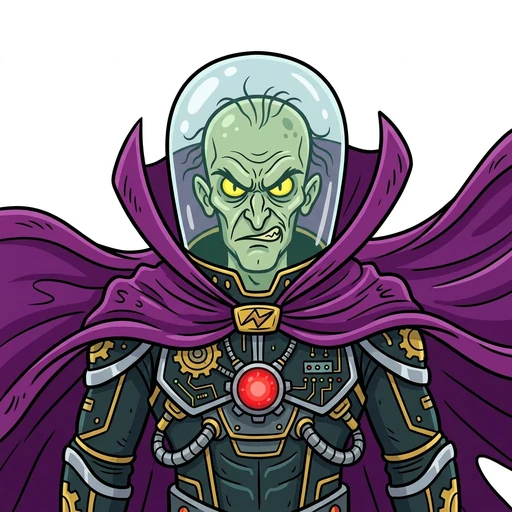
The Illusion Crew
Once upon a time, in the city of New York, people believed that Mysterio worked entirely alone, conjuring his glowing monsters and collapsing skylines out of thin air, all by himself, with nothing more than a wave of his gloved hand.
But that was never quite true.
Behind every towering Elemental, behind every dramatic entrance wrapped in green smoke, stood a small and quiet team of helpers. They were former colleagues from Quentin Beck's days at Stark Industries — engineers, programmers, and drone pilots who had also lost their jobs, and who shared Beck's bitterness about being overlooked, forgotten, and pushed aside by people who never truly saw their talent. There was William Riva, steady and careful, who handled the hardware and kept every drone flying smoothly through the sky, checking each rotor and wire before every single show. There was Guterman, who managed the sound design, making certain that every roar and rumble matched perfectly with the glowing lights overhead, so that even the loudest illusion felt utterly convincing to anyone standing close enough to hear it. Together, this small, quiet crew built and operated the technology that made one single man appear to be an entire army of monsters, working late into the night in hidden workshops far from prying eyes, surrounded by wires, screens, and half-finished projector rigs.
But Beck's boldest move of all — the one that gave his lies the most power — was earning the trust of Nick Fury.
Yes, that Nick Fury. The stern, one-eyed director of a powerful spy organization welcomed Mysterio into secret briefings, introduced him personally to world leaders, and vouched publicly for him as a genuine hero from another dimension. Having someone so widely respected stand beside him gave Beck's illusions an enormous, almost unshakable credibility. Cities across Europe opened their doors without hesitation, rolling out red carpets and hosting grand ceremonies in his honor. Reporters trusted his every word, rarely pausing to ask a single follow-up question, simply nodding along and writing down whatever he said next.
But here is a strange and rather wonderful twist, dear listener, one that even Mysterio himself never quite saw coming: the "Nick Fury" standing beside him was not really Fury at all. It was a shapeshifting ally named Talos, quietly filling in while the real Nick Fury handled urgent matters far away, out among the stars. Talos could look and sound exactly like anyone he chose, and he had chosen, for reasons of his own, to wear Nick Fury's face for a very long while. Even Mysterio — the master of illusion, the man who had spent his whole life studying exactly how to fool people — had himself been completely fooled by a trick even grander than his own. The trickster had been tricked, and he never even realized it, not until it was far, far too late to matter.
As Beck's schemes grew larger and more dangerous, small cracks slowly began forming within his own trusted crew. Some of them grew uneasy, worried that real people might actually get hurt by drones that had been mixed carelessly into what were only ever supposed to be harmless illusions. A few began quietly wondering, in hushed conversations after hours, whether the whole elaborate plan had gone further than any of them had originally intended, back when it had seemed like nothing more than one last, dazzling show. Loyalty, it turned out, was a great deal harder to fake convincingly than smoke and colored light.
In the end, the very team that had helped build the entire Mysterio legend could not save Quentin Beck from the truth finally catching up with him. Whatever illusions a person carefully builds around themselves, the people standing closest to them — and, just as often, the very people they try hardest to fool — tend to see through them eventually, no matter how clever the trick or how loyal the crew behind it.
A crew, after all, can build the smoke, the lights, and the roaring sound effects. But no crew, however skilled, can ever build trust that was never truly real to begin with — because trust, unlike an illusion, cannot be projected from a drone or painted across the sky. It has to be earned, honestly and patiently, one true moment at a time.