Magneto Brotherhood
Once upon a time, two young men sat up very late at Oxford University, drinking tea from chipped cups and arguing about the future.
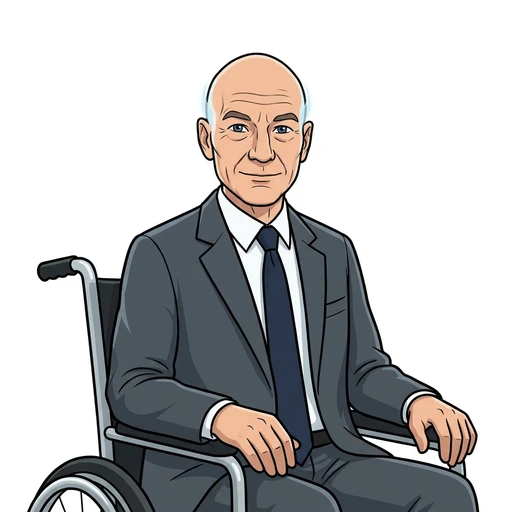
One was Charles Xavier — calm, kind, certain that the world could be made better through patience and trust.
The other was Erik Lehnsherr — brilliant, quietly furious, certain that the world only listened when it was afraid.
They were the best of friends. And they disagreed about nearly everything that mattered.
Years passed. Erik chose a new name: Magneto.
He stood before a group of mutants — fierce, talented, angry — and said: we will no longer hide. We will no longer ask for acceptance. He called his group the Brotherhood of Mutants. Among them was Mystique, who could look like absolutely anyone she chose; Sabretooth, enormous and fast; and Toad, who leaped and scrambled in ways that made everyone nervous.
Professor X heard what Erik was planning, and his heart hurt.
Magneto had decided to go to the United Nations assembly in New York City — where leaders from every nation came to talk — carrying a device that would send a powerful wave transforming every person in the room into a mutant. Not asking. Not persuading. Forcing.
That, Charles knew, was not the answer.
He called his X-Men.
Cyclops moved to the roof of the assembly building, steady and ready, his ruby-quartz visor aligned and his breathing even. Jean Grey — who could move objects with her thoughts alone and hear the feelings of people nearby — positioned herself near the great hall to protect the frightened delegates who did not yet understand what was happening. Beast — brilliant as any scientist Charles had ever known, and capable of moving through a building with a speed and grace that startled even experienced soldiers — sealed off the Brotherhood's retreat routes. They worked without being told twice, because that is what a real team looks like.
They trusted one another completely. That trust had been built over years, lesson by lesson, in the Danger Room and in quiet hallways and over late dinners and in the steady daily work of learning to rely on people who were also learning to rely on you.
Professor X sat in the quiet hum of Cerebro's chamber, put on the silver helmet, and closed his eyes. His mind stretched out past the Westchester hills, past the Hudson River, past the bridges and towers of New York City, until he found the one he was looking for.
Erik. Third floor. Moving fast.
When they came face to face in the tall, echoing assembly chamber, the room filled with rising metal — chairs, railings, pipes bending slowly into the air under Magneto's silent command. Steel beams pointed themselves at Charles's wheelchair like accusing fingers. The delegates pressed themselves against the far wall. Outside the tall windows, the grey city went about its ordinary afternoon, not knowing what was happening in this room.
Professor X did not move. He simply raised one hand.
Palm forward. The gesture of an old friend asking: please. Just look at me.
Magneto looked.
For two full seconds, the metal hung motionless between them.
Jean Grey WHOOSHED a barrier of force between Charles and the floating beams. Cyclops fired — KRAKOOM — and the machine spun across the marble floor and went dark. The Brotherhood retreated into the grey sky.
Afterward, Charles sat alone in the quiet hall, holding the deactivated device. He thought about Erik. He thought about Oxford and chipped teacups and the big, late-night arguments they had never quite finished. Both of them could look at the same difficult world and draw such completely different lessons from it.
Magneto believed: the world only moves when it is frightened.
Charles believed: fear only makes the world smaller.
Neither was wrong about the pain. They disagreed only about what to do with it.
That evening, Professor X closed his eyes and sent a message — not words, exactly. More like a feeling. The warmth of an old friendship. The steady certainty that the door was still open.
Somewhere far away, he thought he felt something answer. Very small. Very quiet.
Charles smiled, just a little, and sat quietly with his tea for a moment longer before going to bed.
Goodnight, Erik, he thought. I haven't given up on you.
He never would.