Villain Sentinels
Once upon a time, a scientist named Bolivar Trask was afraid.
He was afraid of mutants. He had read about them and heard about them and convinced himself they were dangerous — not because he knew many, but because they were different, and different things feel frightening when you do not understand them.
Bolivar Trask put his fear into blueprints. And then he built his blueprints into machines.
The Sentinels.
They were fifty feet tall. Purple steel, with hands the size of cars and eyes that glowed deep orange. Sensors inside them could detect mutant DNA from three miles away. Their program was simple: find mutants and stop them.
The first fleet — twelve Sentinels — launched from Washington, D.C. on a Tuesday morning, rising like a wall of iron clouds moving north toward New York.
In the Cerebro chamber beneath the Xavier mansion, every alert went on at once.
BLIP. BLIP. BLIP. BLIP. BLIP. BLIP. BLIP. BLIP. BLIP. BLIP. BLIP. BLIP.
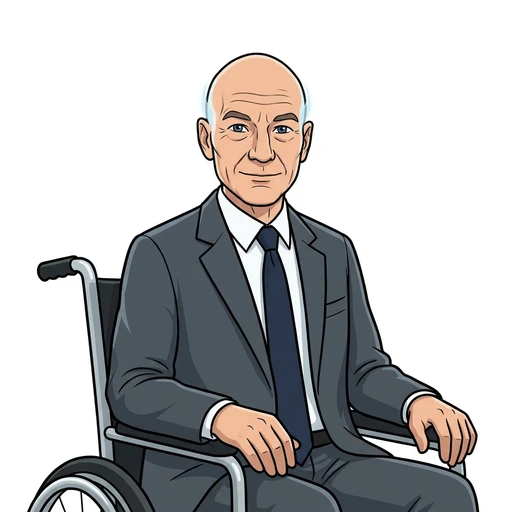
Professor X counted. He thought. He made a plan.
"X-Men," he said, in the voice that was always calm, "we have work to do."
The Blackbird screamed out of the hangar in under a minute.
Storm went first. She rose into the open air above Manhattan and spread her arms wide, pulling a bolt of white lightning from a clear blue sky — KRAKKABOOOM. It hit the first Sentinel's sensors and overloaded them completely. Cyclops lined up and fired — KRAKOOM, KRAKOOM — two precise beams at the joints where neck met chestplate. Two Sentinels went down hard. Wolverine leaped onto a third's shoulder and cut through the back panel with his adamantium claws — SNIKT SNIKT SNIKT — until sparks flew and the robot stopped mid-motion.
Three down. Nine still coming.
Professor X looked at the incoming sensors. Four X-Men. Nine Sentinels. The math was not in their favor.
He sat quietly for a moment. Then he made a decision.
He reached out with his mind — very far, past the city, past the harbor — searching for a familiar shape. An iron-grey mind he had known for decades.
He found it.
I need you. Now.
Magneto arrived above Central Park four minutes later, standing on a disc of levitated metal, his red cape moving in the harbor wind. Professor X spoke for forty seconds. The situation, the numbers, the positions of the incoming fleet. Magneto listened without interrupting.
Then he looked at the approaching robots.
"Obviously," he said.
He raised both hands.
The sound was a deep, groaning metallic SHRIEK as Magneto's power reached out and found every iron molecule in nine Sentinels at once and PULLED. The robots bent and buckled and folded inward on themselves, their frames collapsing like toys squeezed by an invisible fist. Programs failed. Lights went dark. Nine fifty-foot machines compressed into small, harmless balls of crumpled steel that fell gently into the South Meadow of Central Park.
The sky was quiet.
Magneto departed into the horizon without further ceremony.
Magneto departed into the horizon without another word. That was his way — he helped when he chose to, and he did not make speeches about it, and in some ways that was the most honest thing about him.
Professor X opened his laptop in the back of the Blackbird and wrote a careful, measured letter to the United States government. Three paragraphs. Calm. Precise. Patient in tone but absolutely clear in meaning. Explaining that building machines to hunt people based solely on their genetics was not a policy — it was a fear. And fear, left unchecked, built walls between people that took generations to come down.
He signed it: Charles Xavier, Xavier School for Gifted Youngsters, Westchester County, New York.
Then he closed his eyes and sent three words to a mind already moving far away over the Atlantic.
Thank you, Erik.
He waited.
And then — very quietly, like a lamp lit in a distant window — warmth came back. Not words. Just a brief, unmistakable feeling of: you're welcome.
Charles Xavier smiled. Out the window, the city spread below him, towers and parks and a million lives going about their ordinary days, safe and unaware of what had just happened in the sky above them.
The work was not finished. It never was. But today, the sky was clear.
Sleep well. Tomorrow, we keep going.