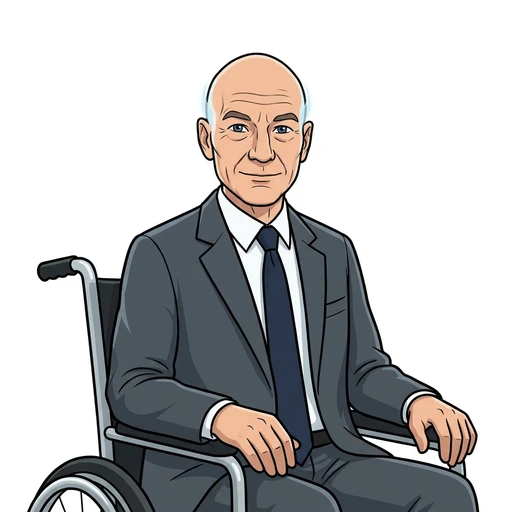
Genosha Hope
Once upon a time, there was an island called Genosha.
It had red cliffs and turquoise water and a harbor full of fishing boats, and for a time it had been governed by people who made a very wrong decision: they decided that mutants were not people but tools, and they built systems to use mutant abilities as labor, under orders, without asking.
I am not going to spend long in that part of the story, because this is a story for bedtime, and what happened on Genosha deserves to be spoken of carefully. It is enough to say: it was wrong, the people who endured it were brave, and what happened next matters more than what came before.
Professor X learned the full history from the survivors' accounts. He read them one at a time in his study, every word, because these were real people and they deserved his genuine attention.
When he was done, he sat quietly with Cyclops.
"I knew the world was capable of this," he said. His voice was steady, but Cyclops heard something behind it — the weight of knowing something true and hard. "Knowing it as a fact is different from carrying it."
"What do we do?" Cyclops asked.
"The same thing we always do," Charles said. "We go toward it."
A diplomatic crisis brought the X-Men to Genosha: a new government, well-intentioned but fragile, had asked for help protecting the surviving mutant population while they rebuilt. An opposing faction — people who preferred the old ways — was organizing to push back.
Professor X came himself. There were moments where presence mattered more than strategy.
On the island, in a low building with white walls and a ceiling fan turning slowly in the ocean air, he met Lorna Dane.
Lorna was a mutant with control over magnetic fields — she could move metal with concentration, the way Storm moved weather. She was strong and careful and deeply, understandably suspicious. She had very good reasons not to trust institutions that arrived saying they wanted to help.
She sat across from him with her arms folded.
"Why are you here?" she asked. A real question, not an unfriendly one.
Charles gave her the truth.
"Because you deserve to have someone sit in this room and acknowledge your experience completely," he said. "And because I believe this island can become something different — though it will require a great deal of work and a great deal of time. I want you to know that we will be here for that work. Not for a month. For as long as it takes."
"Everyone says things like that," Lorna said.
"I know," said Charles. "Which is why I am asking you to watch what we do, and not just what I say."
It was an honest answer. Lorna Dane recognized honesty when she heard it. She nodded, very slightly.
Out across the island, the X-Men were working. Storm positioned herself above the opposing faction's camp and drew clouds and pressure gradients into a configuration that made the roads passable only on foot — not destructive, just very inconvenient. Cyclops had the ground team at every access point, patient and precise.
Professor X went to meet the faction's leader, Phineas Whitmore — a man who had made decisions that caused great harm and had spent years since then trying not to think too carefully about what those decisions meant.
Charles sat down across from him.
"What were you afraid of?" he asked. "Not what you believed — what you were afraid of, underneath it."
Phineas stared at the table. The ceiling fan turned.
Then, haltingly, he began to talk. About the fear of change. The fear of being left behind. The fear of what he did not understand. It was not a proud story. It was a very human one.
Charles listened to all of it. He did not interrupt. He did not judge. He simply paid attention.
When Phineas finished, he said: "I don't know if that explains it."
"It explains a great deal," Charles said. "Fear explains most things, in the end."
A pause. "It doesn't excuse it," Phineas said.
"No," Charles agreed. "It doesn't."
"What happens now?"
"That," said Professor X, "is entirely up to you."
That afternoon, Phineas Whitmore walked into the international court and turned himself in voluntarily.
That evening, Charles sat by an open window in a borrowed room and wrote in his journal.
Progress is not a moment. It is a direction.
He closed the notebook. Outside, lights were on in people's homes. The harbor water was dark and calm. Somewhere, a child was going to sleep in a house where they were safe.
That was enough for tonight.
Sleep well. Keep going. The direction matters.