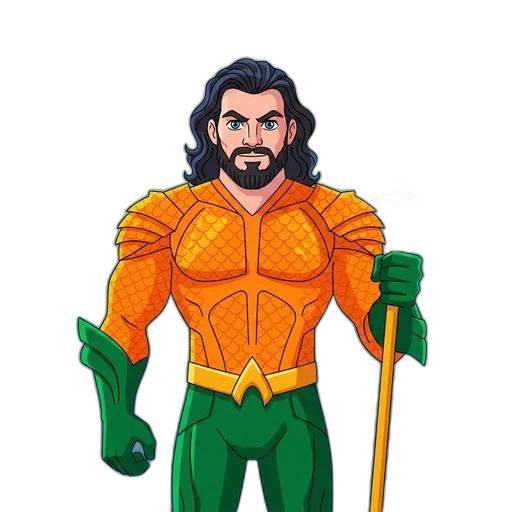
The Dead King
The Arctic ice is very old.
Some of it is ten thousand years old — formed in an age when the world was different, when the sea levels were different, when the creatures living in the water below had different names and different shapes. The ice holds the cold of those years the way a stone holds the heat of the sun: deeply, fundamentally, in its very structure.
And beneath some of that oldest ice, sealed in the absolute cold of a glacier that had not moved in ten millennia, something had been waiting.
Arthur had found the records in the deepest archive of Atlantis — buried in a section of the library that required special permission to access, written in an alphabet three generations older than the one currently used. He had spent two weeks reading them with the help of Atlantis's oldest scholar, a woman named Veris who had been studying dead languages for sixty years and who regarded the documents with an expression Arthur associated with very bad news.
The records described Atlan. The First King. The original ruler of Atlantis, in the age before the modern kingdoms, before the seven-way split, before the coral towers and the glowing corridors. He had been the builder of the first Atlantis and the instrument of its first sinking — his rage, the records said, had called up something that brought the whole continent down, back in the age when the continent existed.
Atlan had not died in the sinking. He had been sealed. In ice. In the Arctic. By powers that no longer existed.
And the records suggested, in the careful way that terrible records often suggest things, that the seal was weakening.
Arthur went alone. This was not wisdom — Mera had made her feelings about this decision very clear, at length, and she was right. But the records had also noted that Atlan's presence amplified the power of Atlantean artifacts in his vicinity, which meant the Trident of Neptune would be unpredictable in his immediate environment, which meant bringing Mera's hydrokinesis into range risked turning her own power against her.
He went alone.
The entrance to the glacier tomb was an archway of obsidian, coated in frost that had not melted since the world was young, its edges carved with symbols that the Trident hummed against, as if in warning. Arthur passed through it into the ice.
Inside, the cold was profound in a way that went beyond temperature. It was the cold of preserved memory, of suspended power, of something very large that had been held in check for a long time and was becoming aware of having been held.
Atlan rose from a throne of frozen kelp and glacial rock. He was enormous — not in height, necessarily, but in presence, the particular enormity of something that has been gathering itself across ten thousand years of solitude. His dark scepter swept a pattern in the air and the psychic visions began: Arthur saw Atlantis sinking again, the water rushing in, the towers failing, people in the corridors with nowhere to go. He saw a king who had failed — who had let his rage exceed his wisdom, who had chosen power over responsibility, who had brought everything down.
He saw a warning.
The visions tried to paralyze him. He let them happen. He did not flinch. He watched the worst of it — the full weight of what had been lost, the full scale of that ancient failure — and he let it be true without letting it own him.
"I know this story," he said aloud, in the cold, to Atlan's vast and waiting presence. "You failed. Atlantis went under. The story continued without you." He held the Trident steady. "My story is not yours."
The Dead King struck. A cold that went beyond the air's cold — a cold of pure negation, of entropy, of the thing that unmakes things. Arthur's limbs went numb to the elbow. He could not feel the Trident in his hand, only knew it was there because he could see it.
He channeled the ocean through it.
Not cold — warm. The deep warmth of the ocean's own geothermal circulation, the living warmth of seven hundred million cubic miles of water in motion, the warmth of coral growing and currents flowing and whales singing and children in the kelp forests of Atlantis playing alongside sea turtles. All of it, through the Trident, into the frozen space between them.
KRAKOOM — the light was blinding in the dark ice. Atlan reeled. The cold shattered. And in the moment of recoil, Arthur moved forward and did the thing the records had not described but that he understood, from his whole life in two worlds: he touched Atlan's scepter and pulled its dark energy downward, into the earth, into the rock below the glacier, back into the ground where old rage belongs.
The Dead King diminished. Not destroyed — released. The resentment that had been building for ten thousand years finally exhausted itself, and what remained was quiet.
Arthur took the scepter. Not to use it. To carry it out, away from this place.
The glacier groaned and settled. He swam up through the Arctic water, which was very cold and very clear, toward the pale light above.
He came out into the Arctic afternoon, where the sun was low and golden and the ice stretched in every direction and the sea was absolutely still.
He stood on the ice with an ancient scepter in one hand and the Trident in the other, and he breathed the cold air, and he thought about what it meant to inherit the worst of your history.
You could be buried by it. Or you could carry it out into the light and choose a different ending.
He turned toward the sea.
He chose the different ending.