Baron Zemo
Some enemies come at you with fists. Some come with armies. And some — the most dangerous kind — come with a plan.
Baron Helmut Zemo did not fight with his hands. He had servants for that. He did not build weapons. He had engineers for that. What Baron Zemo did — what he was genuinely extraordinary at — was think. He thought in long chains of cause and effect, the way a master chess player thinks twelve moves ahead and then twelve moves after that. He set things in motion and then he waited with perfect patience for them to arrive at the conclusion he had always intended.
He was descended from a long line of Zemos — a noble family of warriors who had served empires and commanded armies. He wore a purple mask with a hood, and he spoke quietly, and he was never, ever in a hurry.
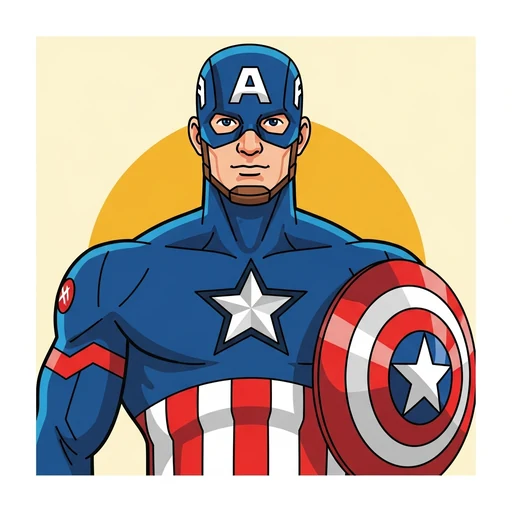
He blamed Captain America for the death of his family during an Avengers battle. The grief in him was real, and terrible, and it had curdled into something cold.
His plan was not to defeat the Avengers by strength. That had been tried before, and it never worked. His plan was simpler and more cruel: make the Avengers defeat themselves.
He would use their trust against them. Their history. Their secrets. He would find the places where old pain lived between them and press on those places until the whole structure cracked.
The Masters of Evil were his instrument — a collection of villains united under Zemo's patient coordination, each one contributing a piece of the puzzle. But even they were secondary to the real weapon, which was information. Knowledge of the things people would rather not face.
Against Captain America specifically, Zemo went for the deepest wound he could find.
Bucky Barnes.
Bucky was Steve's closest friend from Brooklyn, his partner in the war, the one who had always been there. Bucky had been lost in the war — seemingly gone forever, fallen from a train into the cold mountains — and Steve had carried that loss for decades. But Bucky had not died. He had been found, and changed, and turned into something by HYDRA, and he had become the Winter Soldier — a name that made experienced intelligence agents go quiet and pale when they heard it.
Zemo knew all of this. And he used it.
He created situations designed to force Steve to choose between his teammates and his friend, between following the rules that held everything together and following the loyalty that defined who he was. He manufactured evidence, manipulated news cycles, set consequences in motion that rippled outward and dragged more and more people into the conflict.
The Avengers split.
Tony Stark on one side, Steve Rogers on the other, each of them believing they were right, each of them in the grip of something the other couldn't fully understand. The whole team fractured along those lines.
And Zemo watched from the shadows and waited, because this was exactly what he had wanted.
But here is the thing about plans that depend on breaking people: they underestimate what people can endure. They mistake fracture for destruction. Cracked is not the same as broken.
Captain America did not stop being Captain America because a plan had been designed to make him doubt himself. He did not stop standing up for what he believed was right because someone had worked very hard to make the right and wrong of the situation seem impossible to distinguish.
He followed his conscience. He protected Bucky. He held on to the connection that mattered most to him and refused to let Zemo's carefully constructed story tell him who his friend was.
The cost was high. The fractures in the team were real and would take time to heal. That was Zemo's victory, and it was a real one.
But Captain America was still standing. Bucky was still alive. And the truth, eventually, had a way of surfacing.
Zemo was found, in the end, by a man with a quiet voice and very steady hands — a Wakandan warrior named T'Challa who had his own grief and his own reckoning with what vengeance actually costs. Zemo was taken into custody.
He was not sorry. He had done what he had set out to do. The Avengers had been divided.
But they were not gone.
Steve Rogers picked up his shield — again, always again — and began the work of healing. Not because it was easy. Because it was right.
Because that, too, was what Captain America always did.